Sudden lean
A tree that's been straight for years suddenly leans. Usually root failure. Treat as urgent.
Visual Tree Assessments and written reports for homeowners, insurers and planning authorities. Worried about a tree? We'll come and look.
Spot any of these? Get in touch. Most are fixable. A few mean the tree has to come out. Either way, you need to know.
A tree that's been straight for years suddenly leans. Usually root failure. Treat as urgent.
Vertical cracks running down the main stem, or splits where branches meet. Structural integrity may be compromised.
Shelf shaped fungi on the trunk or main branches. Honey fungus, bracket fungi, indicates internal decay.
Ground heaved up around the base, soil cracks, exposed roots that weren't visible before. Root plate failing.
Large dead branches in the canopy that didn't leaf this year, or branches dropping spontaneously in calm weather.
Bark falling off in large patches, deep cavities, woodpecker holes, oozing sap. Decay or pest damage underneath.
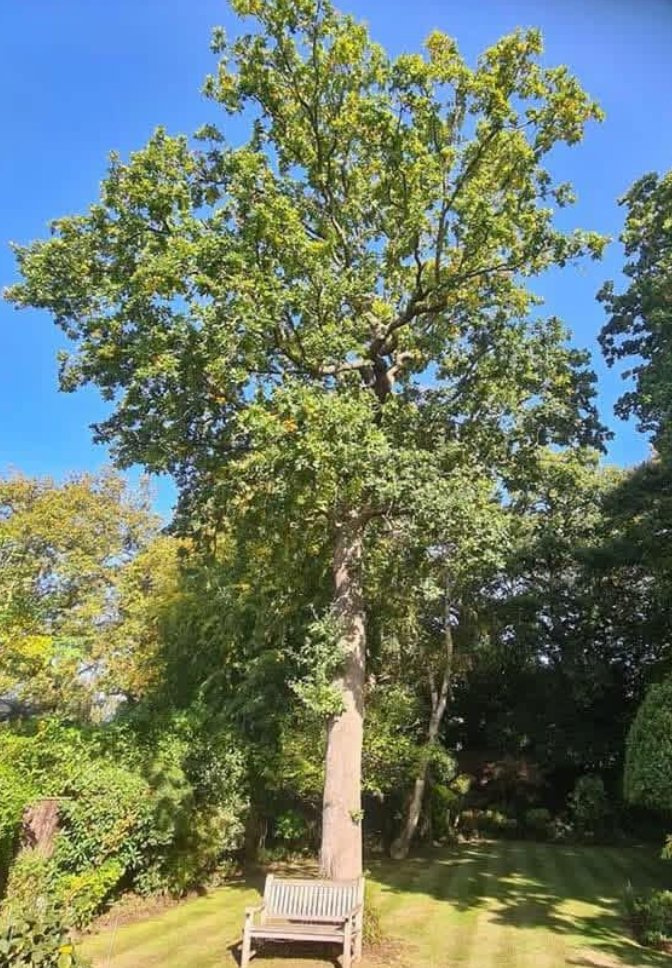
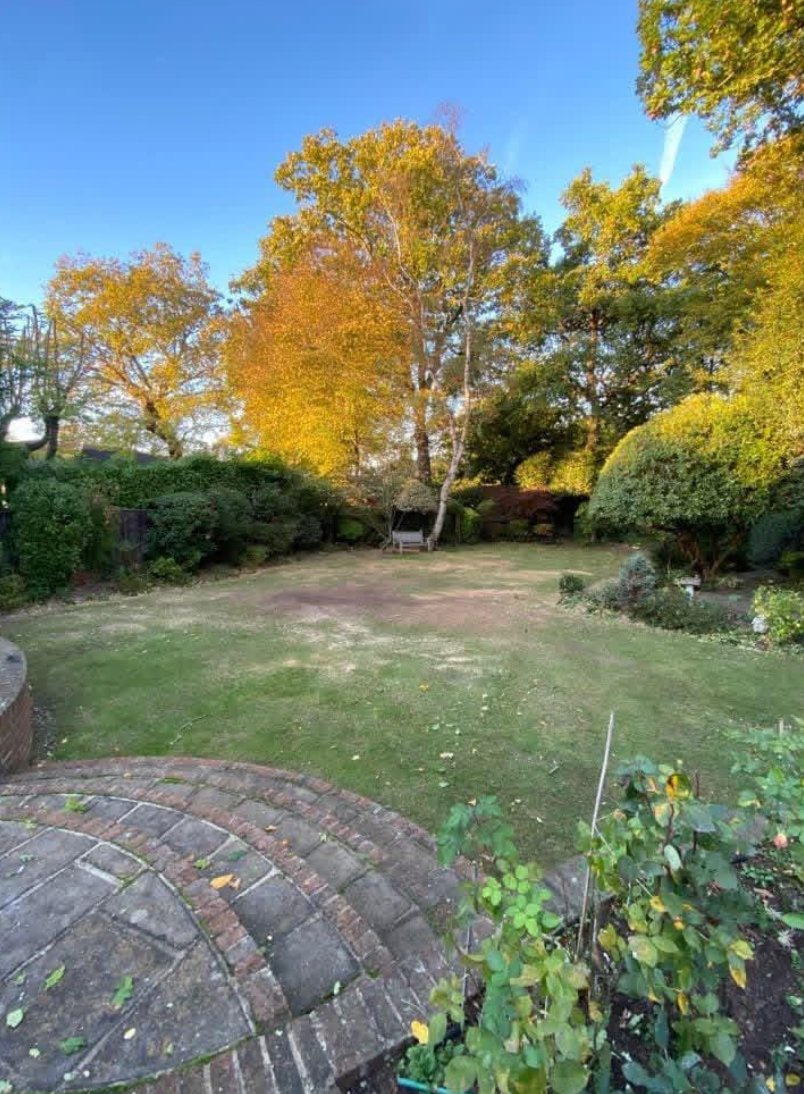
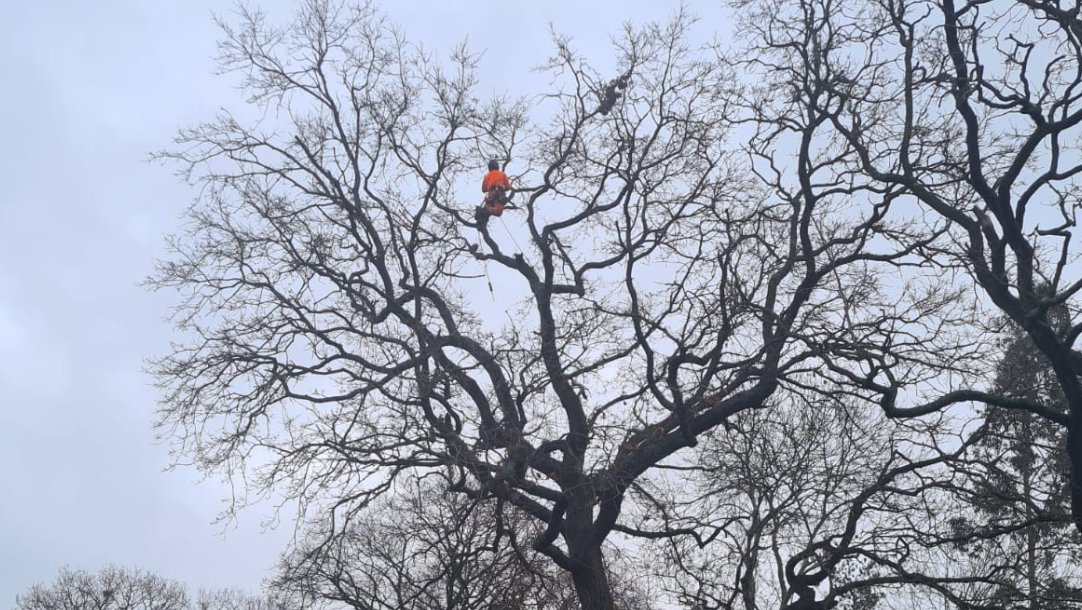
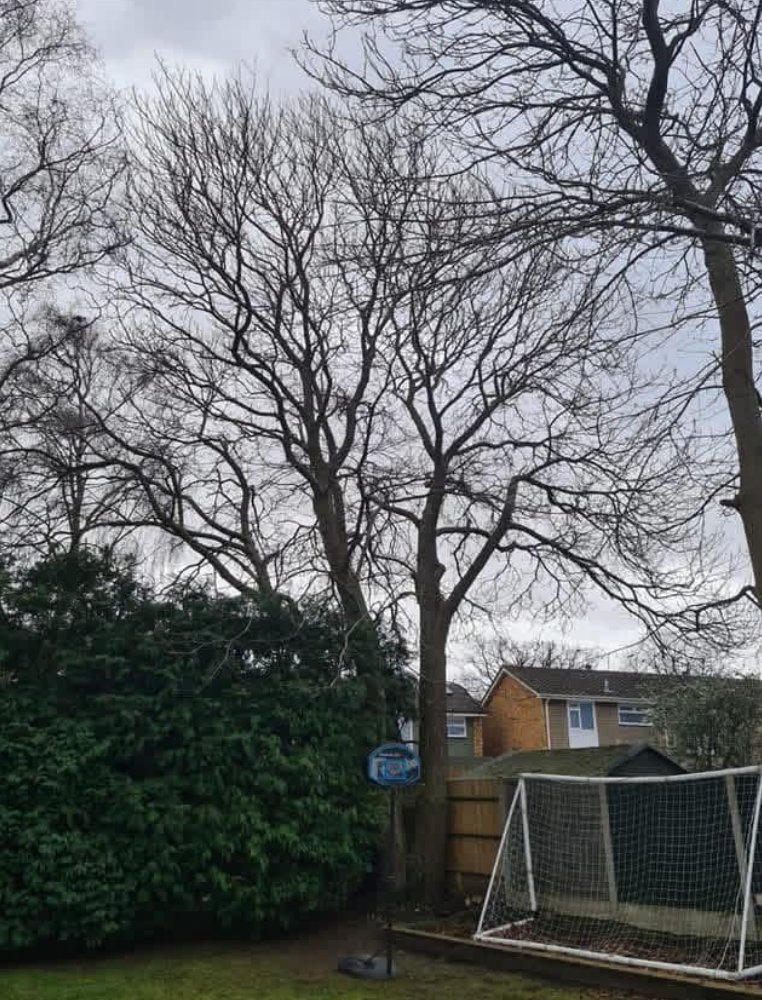
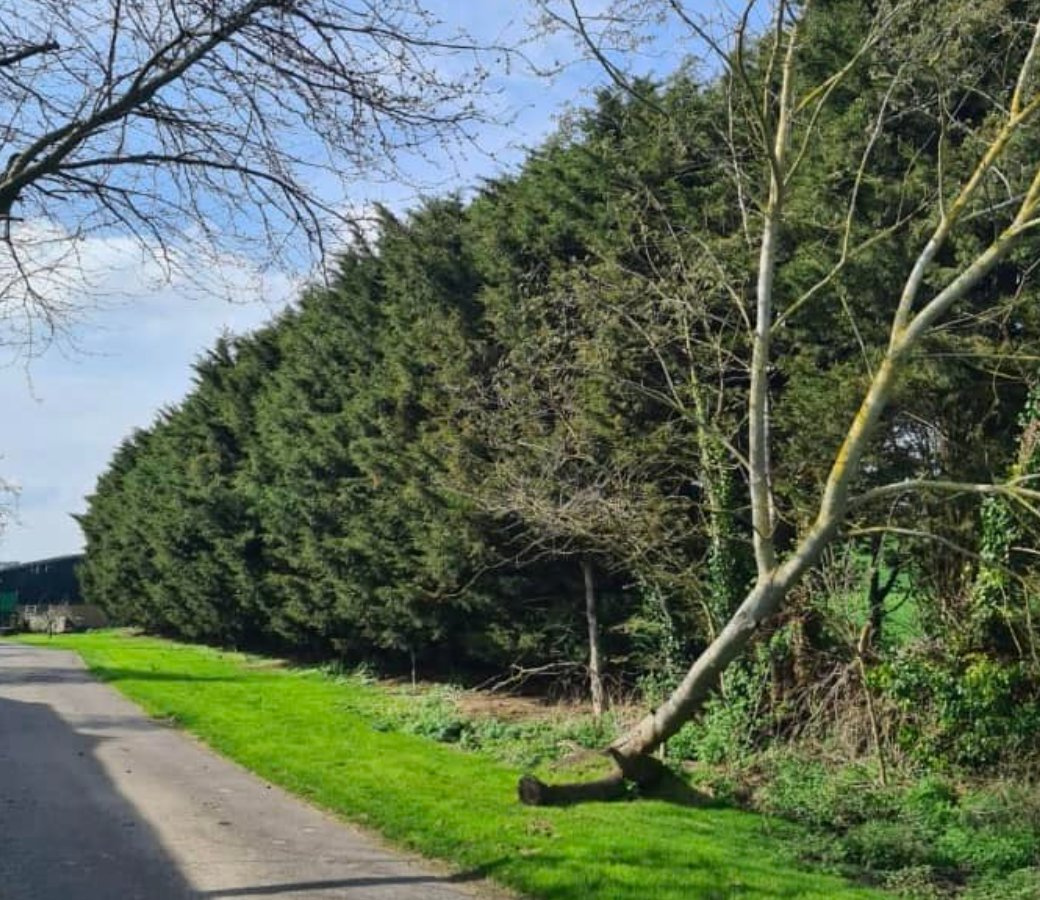
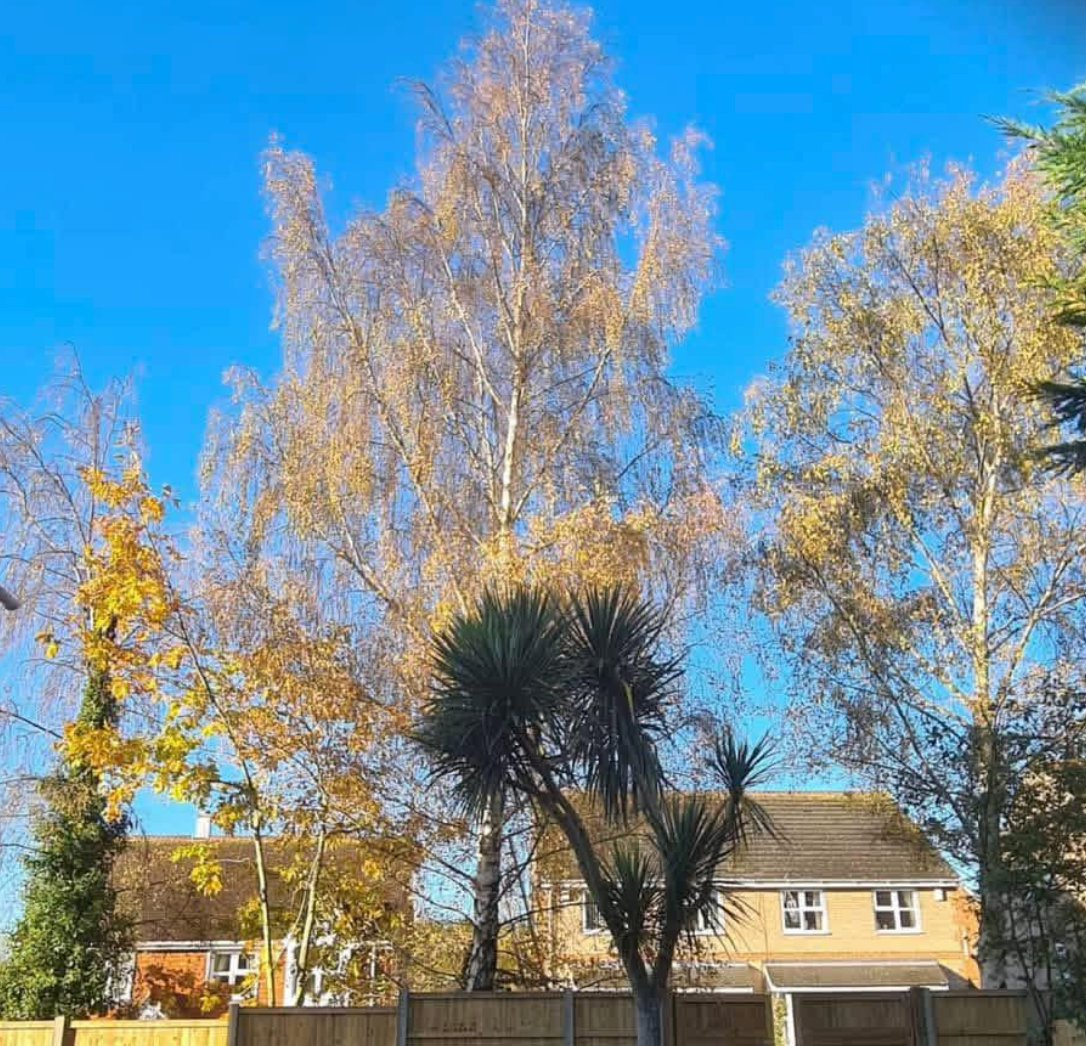
Visual Tree Assessment (VTA) is the standard approach. We walk the tree, photograph anything notable, produce a written report covering species, condition, structural risk, recommended actions and rough timing.
More complex needs (legal disputes, planning, mortgage queries) get a BS 5837 compliant survey. Additional cost.
A proper assessment is methodical. From the root plate to the top of the crown, this is what gets checked.
Fruiting bodies at the base or on the stem are often the first visible sign of internal decay.
Dead limbs over paths, drives and play areas are the most common hazard we find and the easiest to fix.
Old pruning wounds and storm damage can hide weakness. We check how well the tree has compartmentalised them.
Lifting soil, cracked ground or a new lean after wind are signs the anchorage is failing.
Trees lean for all sorts of harmless reasons. A change in lean is a different matter, and we can tell the two apart.
Ash dieback is widespread across Kent. We identify it early, stage it honestly and tell you what it means for your tree.
You do not need to wait for a tree to look dangerous. These are the situations where a written assessment earns its keep.
A big tree near a property raises questions for surveyors and lenders. An assessment answers them before they hold things up.
The tree stayed up, but should it have? A check after rough weather tells you whether anything has changed.
Insurers increasingly want documented evidence that trees near the house are being managed. Our reports are written for exactly that.
When a tree overhangs a neighbour, an independent written opinion takes the heat out of the conversation.
Applications involving protected trees go far more smoothly with a proper report attached.
Thinning crown, early leaf drop, dieback at the tips. If your gut says something has changed, it is worth an expert eye.
No jargon for the sake of it. You get findings you can actually read, and a copy that satisfies insurers, surveyors and planning officers. Most reports are with you within three working days of the visit.
Often a look is enough. If we visit and the tree is clearly fine, we will say so and not charge you for a report you do not need. The written assessment is for when something needs documenting or there is a genuine question to answer.
Yes, and the assessment fee comes off the price if you book the works with us. You are equally free to take the report to another firm. It is your document.
Not necessarily. It depends how far the disease has progressed and what the tree could hit if it failed. Plenty of infected ash can be monitored or reduced rather than felled. We stage it honestly and give you the options.
Most single tree assessments take under an hour on site. Larger gardens and multiple trees take longer, and we will give you a time estimate when you book.
For storm damage claims, subsidence investigation, and property risk reports.
Best case, we tell you it's fine and you can stop worrying. Worst case, we tell you what needs doing.